Moringa Growing Systems
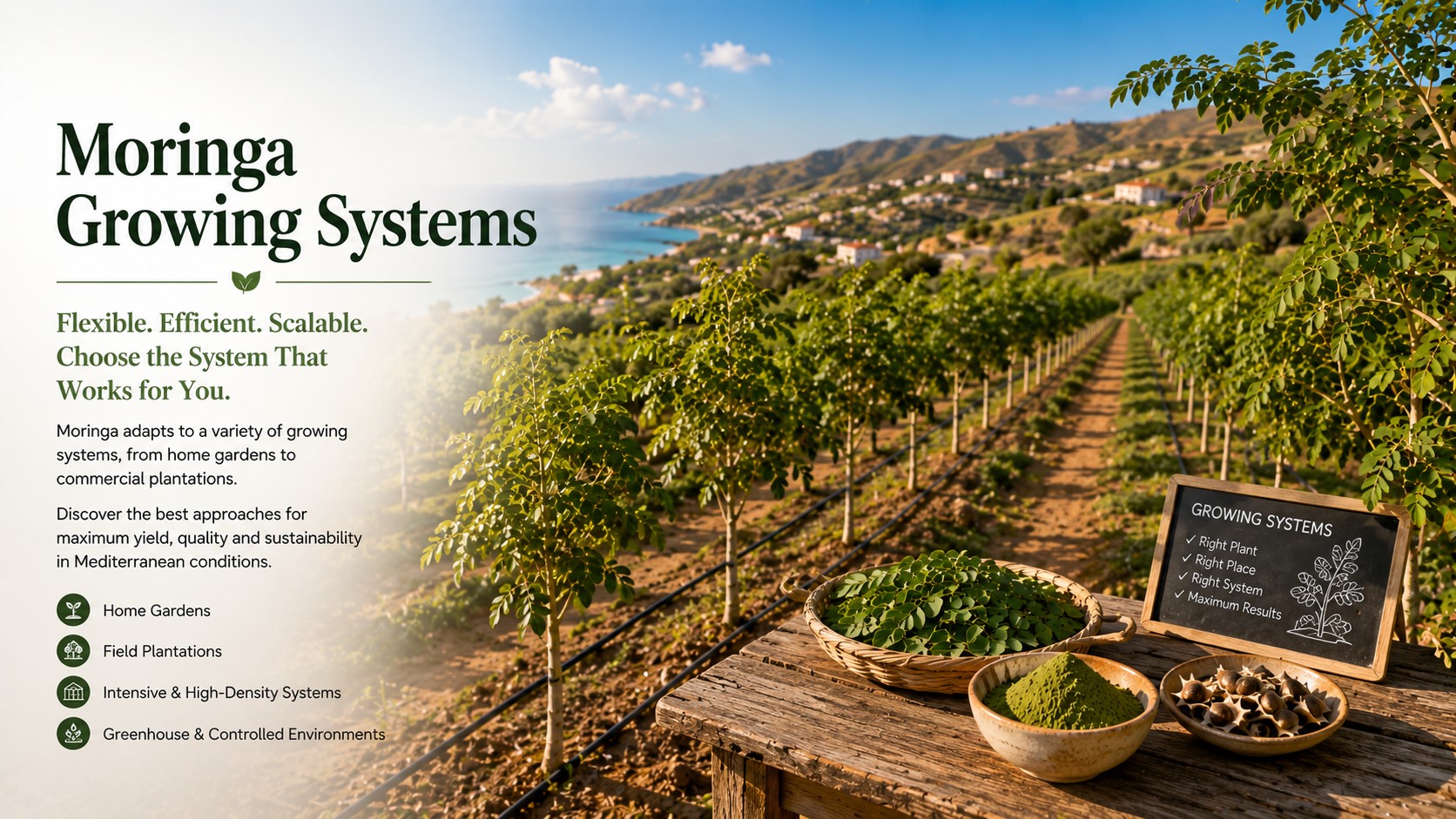
One of the greatest strengths of Moringa oleifera is its adaptability. Rather than being limited to a single production method, Moringa can be cultivated in containers, gardens, orchards, commercial plantations and educational settings. The most successful growing system depends on the grower’s objectives, available space, water resources and long-term management plan. This section introduces the principal cultivation systems that will be explored in dedicated guides throughout MoringaTreesCyprus.com.
Home Garden Trees
Many people begin with a single tree planted in a sunny garden. Home-grown trees can provide seasonal shade, attractive foliage and repeated leaf harvests when managed with regular pruning.
Container and Patio Growing
Moringa can be grown in suitably sized containers where drainage, irrigation and root management receive careful attention. Container growing is particularly useful for patios, courtyards and locations where in-ground planting is impractical.
Grow Bags and Nursery Containers
Grow bags and nursery pots allow young trees to develop healthy root systems before planting or sale. Professional nursery production focuses on vigorous roots, balanced growth and careful hardening before trees reach customers.
Raised Beds and Kitchen Gardens
Raised beds improve drainage and soil management, making them an attractive option where native soils are compacted or difficult to work. They also provide convenient access for harvesting and maintenance.
Commercial Leaf Production
Leaf production systems prioritise frequent pruning to encourage repeated flushes of new foliage. Plant spacing, irrigation, nutrition and harvesting schedules are managed differently from ornamental or seed-producing trees.
Seed and Flower Orchards
When the objective is seed production, trees are generally allowed to develop a stronger framework and produce flowers and pods. Orchard design, pollination and long-term canopy management become increasingly important.
Agroforestry and Mixed Farming
Moringa may be incorporated into diversified farming systems where it complements other crops. Careful planning is required to balance sunlight, water availability and competition between species.
Educational and Demonstration Gardens
Schools, community gardens and research projects benefit from Moringa as a teaching resource. Demonstration plantings allow visitors to observe propagation, pruning, flowering and harvesting throughout the growing season.
Choosing the Right System
There is no single best way to grow Moringa. The appropriate system depends on the intended purpose of the trees, local climate, available space, irrigation capacity and long-term maintenance goals. The Kelokedara Moringa Project will evaluate several of these cultivation methods under Mediterranean conditions so that future recommendations are informed by practical experience as well as recognised horticultural knowledge.