Commercial Moringa Leaf Production
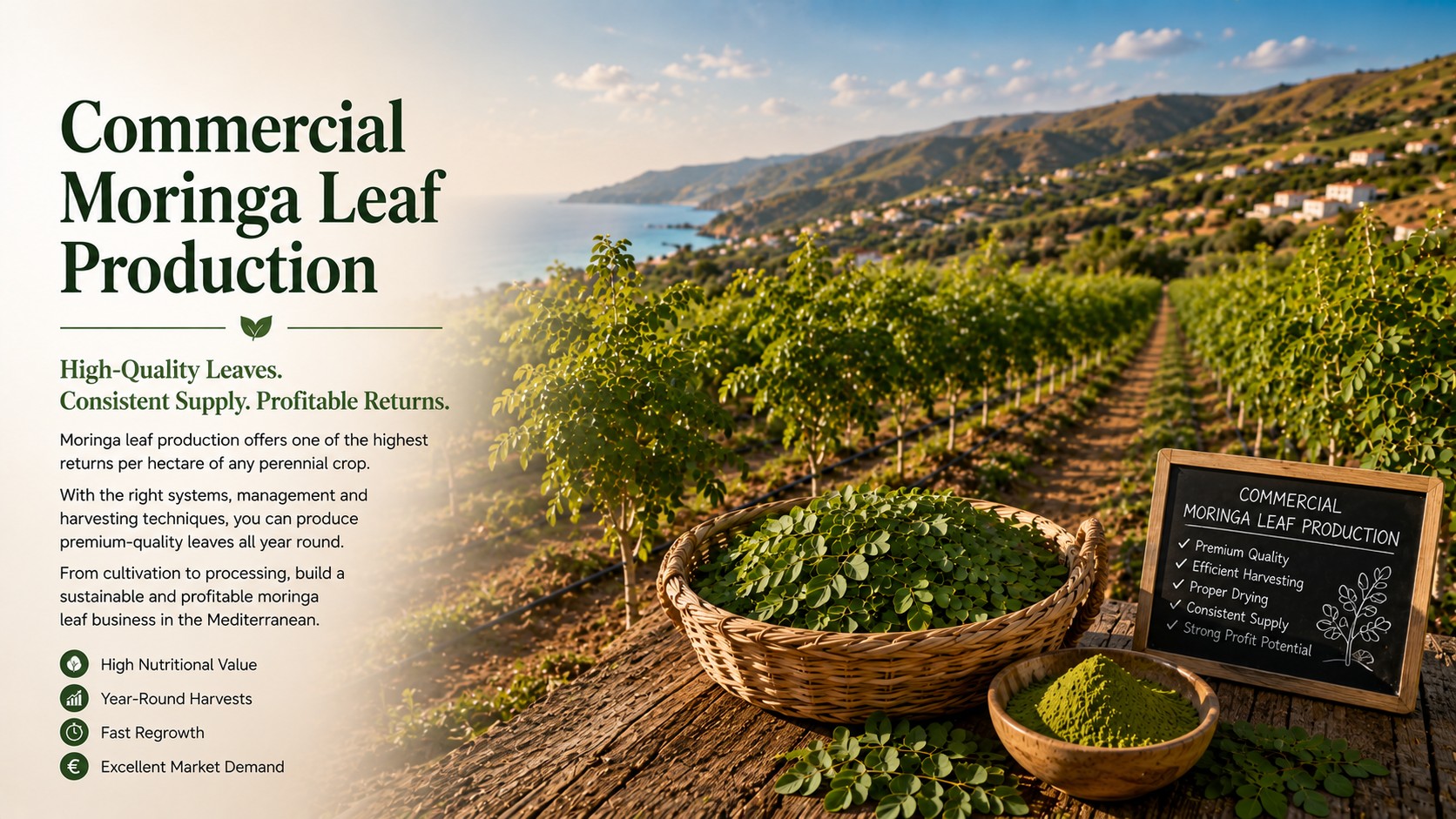
Moringa leaf production is one of the most practical cultivation systems for commercial growers who wish to harvest fresh foliage on a regular basis. Unlike trees managed primarily for seed production, leaf systems focus on encouraging continuous vegetative growth through careful pruning, irrigation and nutrition. The objective is to produce healthy, tender shoots that can be harvested repeatedly while maintaining vigorous plants.
Planning a Leaf Plantation
Commercial success begins with good planning. Site selection, soil preparation, access to reliable irrigation and efficient harvesting routes all influence long-term productivity. Fields should be designed to allow safe movement of workers and equipment while maintaining good airflow around the plants.
Plant Density and Pruning
Leaf production systems generally use closer spacing than ornamental or seed orchards. Trees are pruned regularly to maintain a manageable height and stimulate new shoots. The exact spacing and pruning schedule should be adapted to local growing conditions and the intended harvest method.
Soil Fertility and Irrigation
Healthy leaf production depends on balanced soil fertility and consistent moisture. Well-drained soils enriched with organic matter help support vigorous root systems. Efficient irrigation systems reduce water waste while supplying plants during periods of active growth.
Harvesting and Quality
Regular harvesting encourages fresh regrowth when carried out correctly. Leaves should be handled carefully to minimise damage and preserve quality before drying, processing or sale. Good hygiene and prompt post-harvest handling are essential where leaves are intended for food products.
The Kelokedara Moringa Project
The Kelokedara Moringa Project will evaluate Mediterranean leaf production techniques under Cyprus conditions. Planned observations include pruning responses, harvest frequency, seasonal growth patterns, irrigation strategies and practical production records. These observations will be published alongside recognised horticultural guidance to provide growers with transparent and useful information.