Commercial Moringa Flower Production
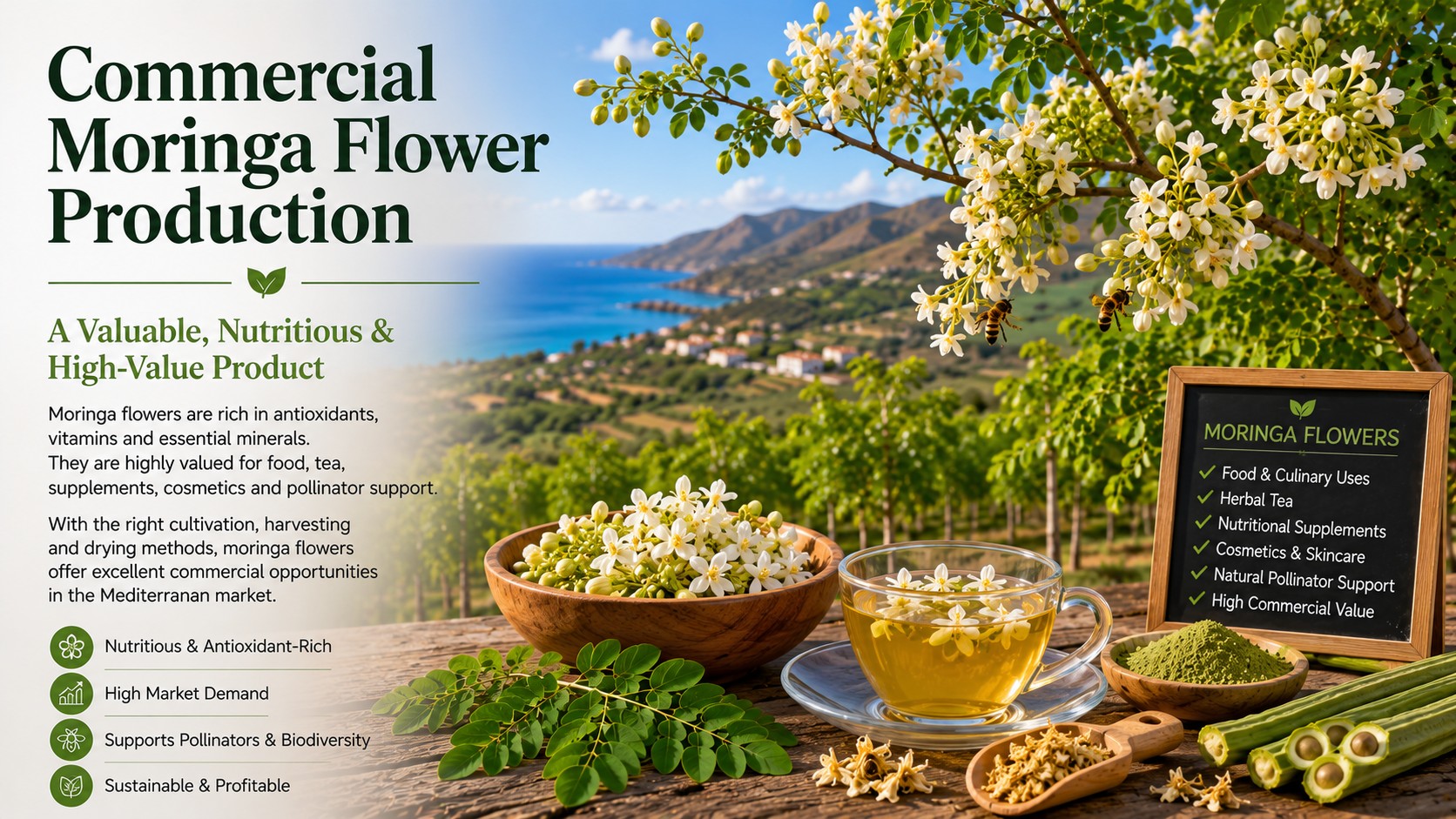
Moringa flowering marks an important stage in the life of a mature tree and in commercial Moringa flower production. Healthy flowering supports seed production, contributes to orchard biodiversity and, in some regions, provides edible blossoms for culinary use. Commercial flower production requires different management priorities from intensive leaf production because the objective is to encourage flowering while maintaining vigorous, healthy trees.
Understanding the Flowering Cycle
The timing and abundance of flowering are influenced by climate, tree maturity, pruning history, nutrition and water availability. Observing these seasonal patterns helps growers understand how management practices affect productivity and future seed development.
Pollination and Biodiversity
Moringa flowers attract a range of pollinating insects. Maintaining healthy pollinator habitats around orchards can improve ecological resilience and support successful pod development. Flowering trees also contribute to broader biodiversity within well-managed agricultural landscapes.
Managing Trees for Flower Production
Trees intended for flower and seed production are generally pruned differently from those grown for repeated leaf harvests. A balanced canopy, good airflow and adequate sunlight encourage healthy flowering while reducing unnecessary stress on the tree.
Harvesting and Quality
In locations where flowers are harvested for culinary or educational purposes, careful handling helps preserve freshness and quality. Hygienic harvesting practices and prompt processing are important when flowers are intended for human consumption.
The Kelokedara Moringa Project
One objective of the Kelokedara Moringa Project is to document flowering behaviour under Mediterranean conditions. Seasonal records will include flowering periods, pollinator activity, environmental influences and the relationship between flowering, pod development and seed production.