Moringa Propagation and Germination
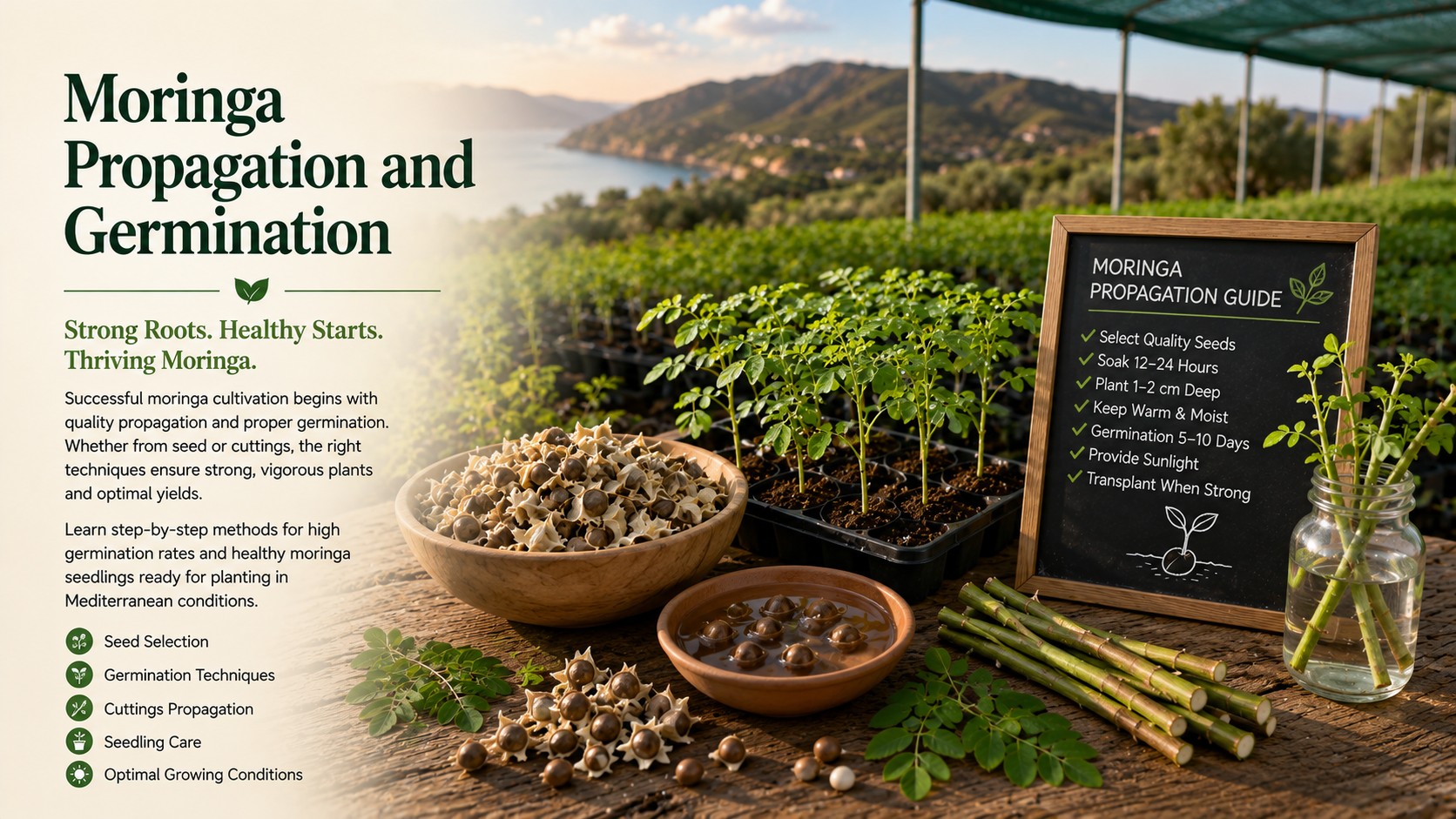
Moringa propagation is the starting point for every successful tree. Whether producing a single garden specimen or thousands of nursery plants, careful propagation determines the health, vigour and uniformity of future trees. This website promotes practical, evidence-based propagation methods suited to Mediterranean conditions.
Growing Moringa from Seed
Seed propagation is the most common method of producing Moringa trees. Fresh, viable seed, clean growing media and suitable temperatures all contribute to reliable germination. Consistent moisture is important, but excessive watering can reduce success by encouraging disease and poor root development.
Selecting High-Quality Moringa Seed
Good propagation begins with good seed. Mature, properly stored seed generally performs more consistently than damaged or poorly stored material. Maintaining records of seed origin, harvest date and storage conditions supports long-term nursery quality.
Moringa Growing Media and Containers
A free-draining propagation mix encourages healthy root growth while reducing the risk of waterlogging. Root trainers, propagation trays, nursery pots and grow bags each have advantages depending on production goals. Container selection should encourage strong root systems that transplant successfully.
Managing Young Moringa Seedlings
Young Moringa seedlings require adequate light, balanced irrigation and protection from environmental extremes during establishment. Routine inspection allows growers to identify nutritional deficiencies, pests or disease early, improving survival and uniformity.
Propagation from Cuttings
In suitable situations, Moringa can also be propagated from stem cuttings. This method may be useful for preserving selected characteristics from established trees. Successful rooting depends on healthy parent material, suitable environmental conditions and careful aftercare.
Moringa Tree Hardening Off and Transplanting
Before planting into gardens or orchards, nursery-grown plants should be gradually acclimatised to outdoor conditions. Hardening off reduces transplant shock and prepares young trees for changing temperatures, wind and sunlight.
The Kelokedara Moringa Project
The Kelokedara Moringa Project will compare propagation methods under Mediterranean conditions, including seed viability, germination performance, growing media, container systems and transplant success. Practical observations will be incorporated into future cultivation guides alongside recognised horticultural references.