Why Cyprus is an Ideal Place to Grow Moringa
Cyprus and the Mediterranean Moringa Opportunity
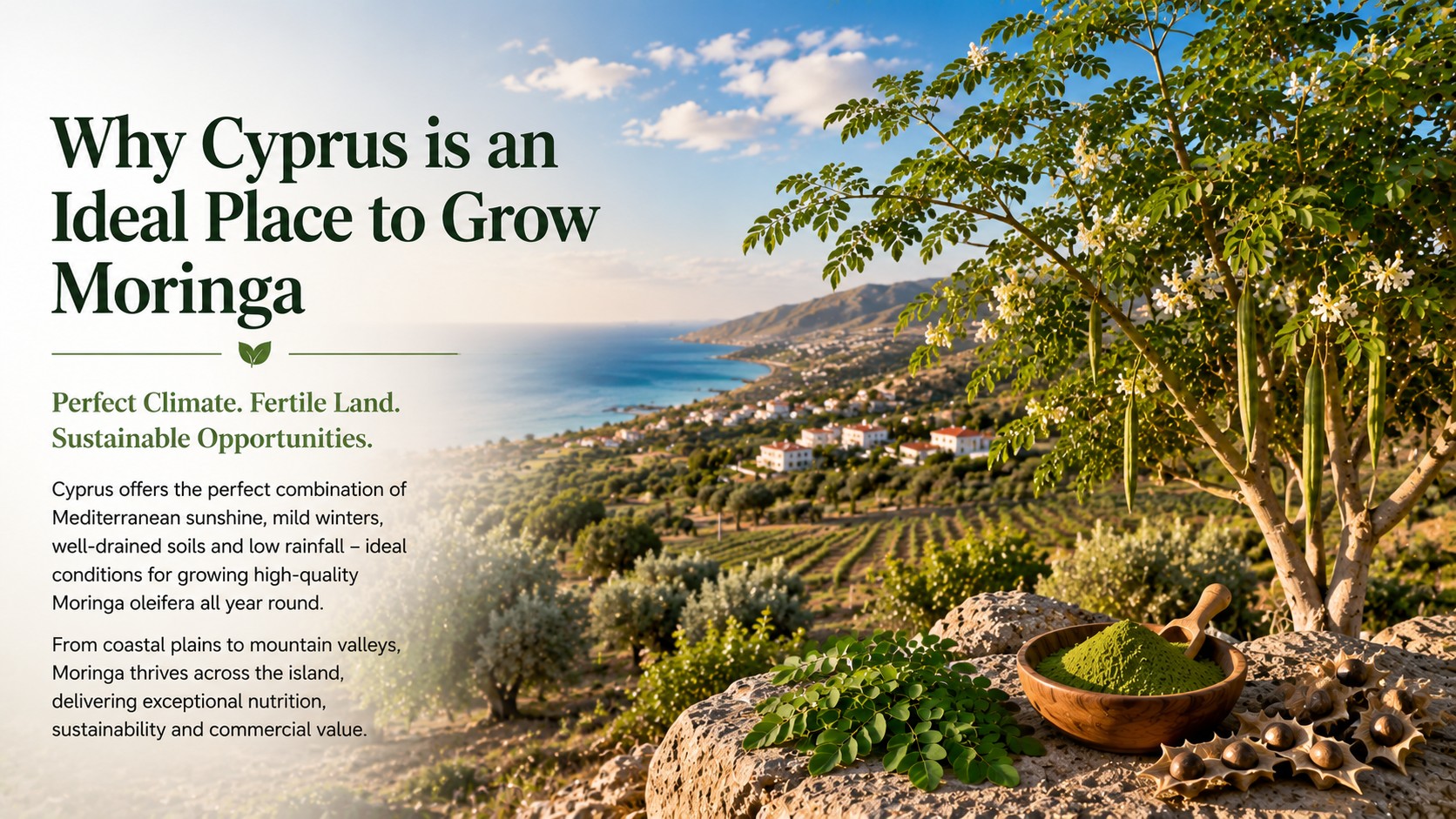
The Mediterranean region presents unique opportunities for cultivating Moringa oleifera. Cyprus, positioned at the crossroads of Europe, Asia and Africa, enjoys long sunshine hours, warm summers and diverse microclimates that make it an excellent location to study and develop sustainable Moringa cultivation. While the island is not tropical, many areas provide conditions that support healthy growth when appropriate horticultural practices are followed.
Climate Advantages
Successful Moringa cultivation depends on understanding local conditions rather than relying exclusively on advice written for tropical regions. Much of Cyprus benefits from extended growing seasons, high light levels and relatively dry summers. These factors can encourage vigorous growth, provided irrigation, soil preparation and pruning are managed carefully. Cooler winter temperatures in some districts also make site selection and seasonal management important parts of successful cultivation.
The Importance of Microclimates for Moringa
Not every part of Cyprus is identical. Coastal areas, inland valleys and elevated villages each have distinct growing characteristics. Wind exposure, frost risk, drainage and elevation all influence how a tree develops. One of the aims of the Kelokedara Moringa Project is to document how these local differences affect cultivation so growers can make informed decisions based on realistic Mediterranean conditions.
Moringa Soils and Water Management
Cyprus contains a wide variety of soil types, from limestone-rich ground to sandy coastal soils and heavier clay-based areas. Moringa generally performs best where drainage is good and root systems are not subjected to prolonged waterlogging. Improving soil structure with organic matter, designing efficient irrigation systems and reducing unnecessary water use are central themes throughout this website.
Supporting Sustainable Moringa Agriculture
As climate resilience becomes increasingly important, growers are looking for crops that can fit into diversified farming systems. Although Moringa is not a universal solution, it may have an important place within carefully managed Mediterranean gardens, smallholdings and commercial enterprises. Our objective is to explore these opportunities responsibly, documenting practical experience while encouraging environmentally sound cultivation methods.
Looking to the Future
Through the Kelokedara Moringa Project we intend to build one of Europe’s most comprehensive collections of practical knowledge on Mediterranean Moringa cultivation. By sharing observations, refining techniques and continually updating our educational resources, we hope to support a new generation of gardeners, nurseries and commercial growers across Cyprus and beyond.