Moringa Frequently Asked Questions
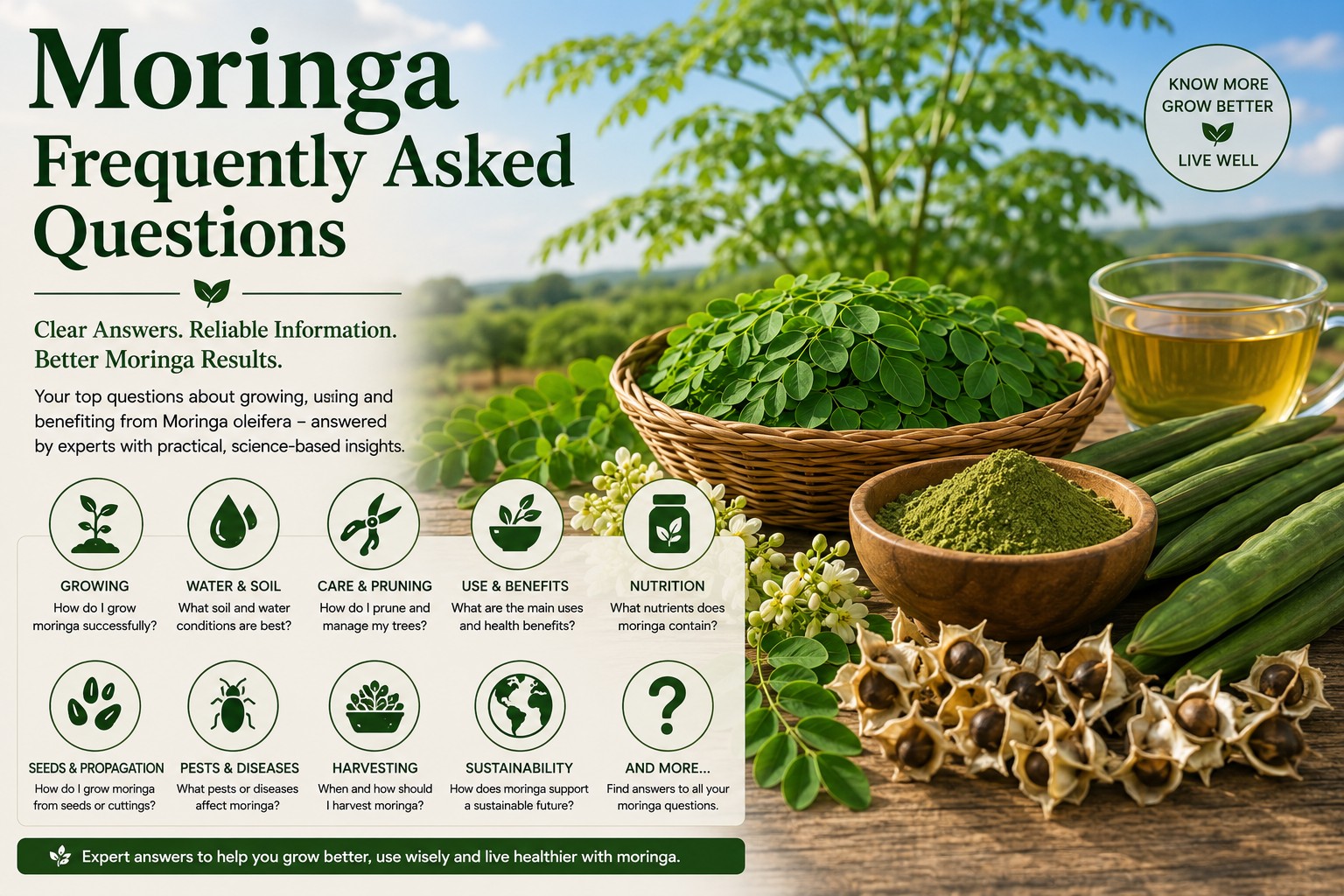
1. Can Moringa grow in Cyprus?
Yes. Many parts of Cyprus provide favourable Mediterranean conditions when suitable sites, soils and irrigation practices are used.
2. Does Moringa tolerate drought?
Established trees can tolerate dry periods better than young plants, but all trees benefit from appropriate water management.
3. Can I grow Moringa in a pot?
Yes. Container growing is possible using suitable pots, free-draining media and regular maintenance.
4. How long do seeds take to germinate?
Germination time depends on seed quality and growing conditions. Fresh, viable seed generally performs best.
5. How often should Moringa be pruned?
Pruning frequency depends on whether the tree is grown for leaves, seeds, flowers or ornamental purposes.
6. What soil is best?
Well-drained soils with good organic matter generally provide the best growing conditions.
7. Can Moringa survive winter?
Performance depends on local temperatures and microclimate. Site selection and protection can improve resilience.
8. Is drip irrigation recommended?
Drip irrigation is often an efficient way to supply water directly to the root zone while reducing waste.
9. Can Moringa be grown commercially?
Yes, with careful planning, sound horticultural practices and a clear production objective.
10. Where can I learn more?
The guides throughout MoringaTreesCyprus.com and the Kelokedara Moringa Project will continue to expand with practical information and Mediterranean growing experience.