Moringa Sustainability and Regenerative Agriculture
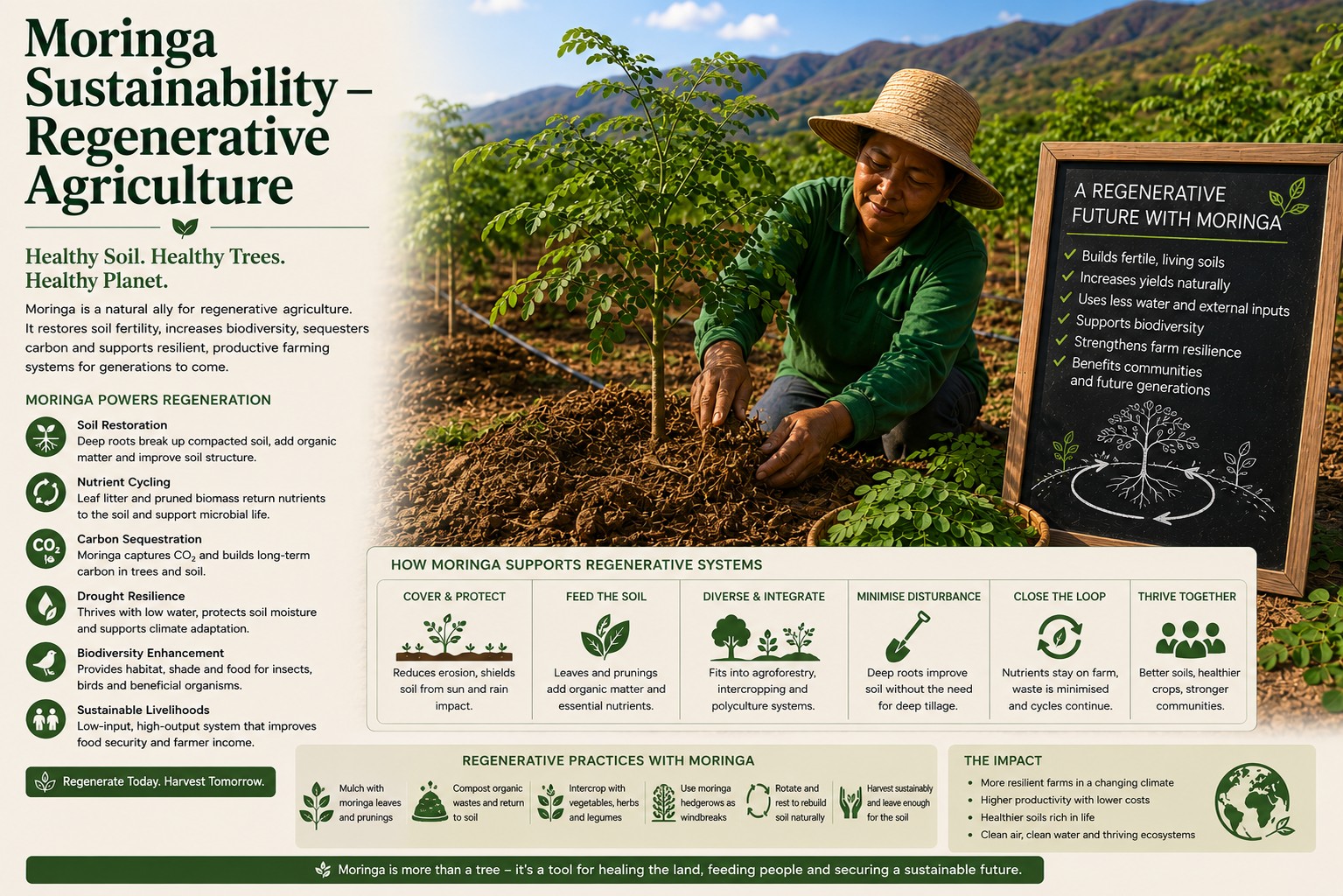
Sustainability is a guiding principle of the Kelokedara Moringa Project and an important part of responsible horticulture. Successful tree cultivation is not measured only by harvests, but also by the long-term health of soils, efficient use of water, protection of biodiversity and thoughtful management of natural resources. Moringa cultivation should be viewed as one component of a balanced agricultural system rather than a standalone solution.
Building Healthy Soils for Moringa Trees
Healthy soils support healthy trees. Maintaining organic matter, reducing unnecessary disturbance and encouraging biological activity help improve soil structure and long-term productivity. Good soil stewardship benefits both home gardens and commercial orchards.
Moringa Efficient Water Use
Water is one of the Mediterranean region’s most valuable resources. Carefully designed irrigation systems, mulching, soil improvement and routine monitoring help growers use water efficiently while supporting healthy tree development.
Moringa Trees Supporting Biodiversity
Diverse agricultural landscapes provide habitats for pollinating insects, birds and beneficial organisms. Flowering Moringa trees can contribute to this diversity when integrated into well-managed gardens, orchards and mixed farming systems.
Moringa Regenerative Growing Principles
Regenerative agriculture encourages long-term improvements in soil health, ecosystem resilience and sustainable food production. Although practices vary between farms, careful management of soil, water and vegetation can help create productive systems that remain resilient over time.
The Kelokedara Moringa Project
The Kelokedara Moringa Project will explore sustainable cultivation techniques suited to Mediterranean conditions. Observations on soil improvement, irrigation efficiency, biodiversity and orchard management will be recorded alongside recognised horticultural guidance to help growers adopt practical, environmentally responsible methods.