Moringa Harvesting and Post-Harvest Handling
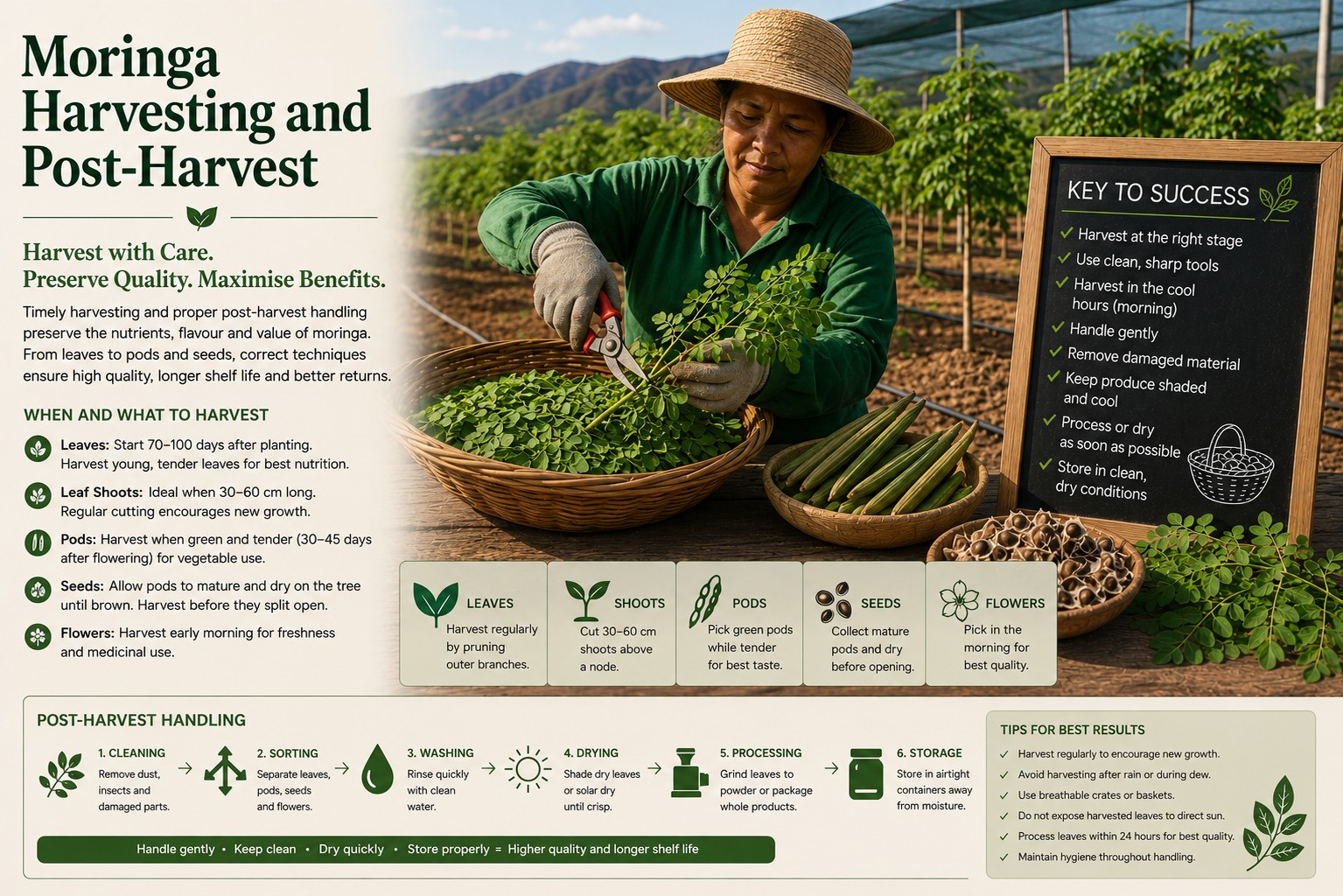
Moringa cultivation does not end when a tree reaches maturity. The quality of leaves, flowers and seed pods depends greatly on when and how they are harvested and the care taken immediately afterwards. Good harvesting practices help preserve freshness, reduce waste and support consistent quality for home growers, nurseries and commercial producers alike.
Harvesting Moringa Leaves
Leaves should be harvested from healthy, actively growing trees using clean tools and careful handling techniques. Regular harvesting can encourage fresh growth when combined with appropriate pruning and nutrition. Harvest timing should balance plant health with the intended use of the foliage.
Harvesting Moringa Flowers and Seed Pods
Trees managed for flowering and seed production require a different harvesting strategy from intensive leaf systems. Flowers and pods should be collected at suitable stages of development to maintain quality and support future propagation or culinary use where appropriate.
Moringa Hygiene and Food Safety
Where harvested material is intended for human consumption, clean handling practices are essential. Harvest containers, tools, drying areas and storage facilities should be kept clean to minimise contamination and maintain product quality.
Moringa Drying, Storage and Packaging
Freshly harvested material should be processed promptly using methods appropriate to the intended product. Correct drying, moisture control and storage help preserve quality before packaging or further processing. Clear batch records also support traceability and continual improvement.
Moringa Quality Control
Professional production benefits from routine inspection, grading, and record-keeping. Monitoring harvest dates, yields, drying performance and storage conditions allows growers to identify trends and refine production methods over time.
The Kelokedara Moringa Project
The Kelokedara Moringa Project will document seasonal harvesting schedules, post-harvest handling methods and quality observations under Mediterranean conditions. These practical records will complement recognised horticultural guidance and contribute to future cultivation recommendations.