Moringa Pruning and Tree Management
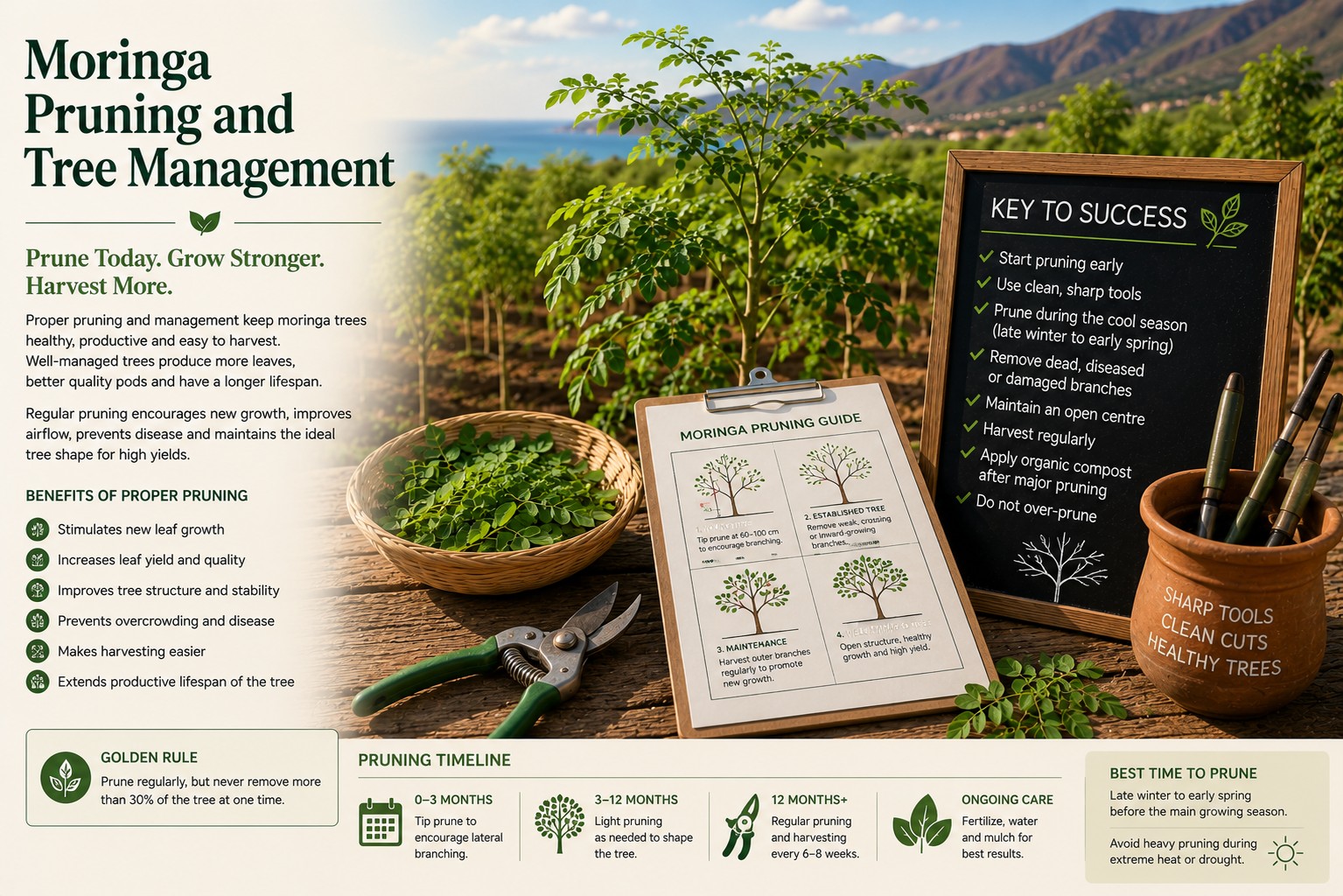
Moringa oleifera responds well to thoughtful pruning, making tree management one of the most important skills for successful cultivation. Pruning influences tree height, canopy shape, airflow, harvest efficiency and long-term productivity. The appropriate approach depends on whether trees are grown for ornamental value, leaf production, flowers, seeds or nursery stock.
Moringa Formative Pruning
Young trees benefit from early formative pruning that encourages a balanced framework of strong branches. Developing a well-structured canopy from the beginning can improve stability, simplify maintenance and support future harvesting.
Moringa Pruning for Leaf Production
Trees managed for repeated leaf harvests are commonly maintained at a lower height through regular pruning. This encourages vigorous new shoots, keeps foliage within easy reach and supports repeated harvesting during the growing season.
Managing Moringa Trees for Seed and Flower Production
Trees intended for flowering and seed production are generally pruned less aggressively than intensive leaf systems. Maintaining a healthy canopy while allowing branches to mature supports flowering, pollination and pod development.
Coppicing and Pollarding
Coppicing and pollarding are recognised tree management techniques that may be appropriate in certain production systems. The choice of method depends on the desired outcome, tree age and long-term management objectives. Each approach should be applied carefully to avoid unnecessary stress on the plant.
Seasonal Moringa Tree Care
Pruning should be considered alongside irrigation, nutrition and seasonal growth patterns. Monitoring tree health throughout the year allows growers to remove damaged or unproductive growth while maintaining balanced development.
The Kelokedara Moringa Project
The Kelokedara Moringa Project will evaluate different pruning strategies under Mediterranean conditions, recording observations on regrowth, canopy development, harvest efficiency and overall tree performance. These practical findings will complement recognised horticultural guidance.